
Our Impact
YAF Impact
Your Ally Foundation
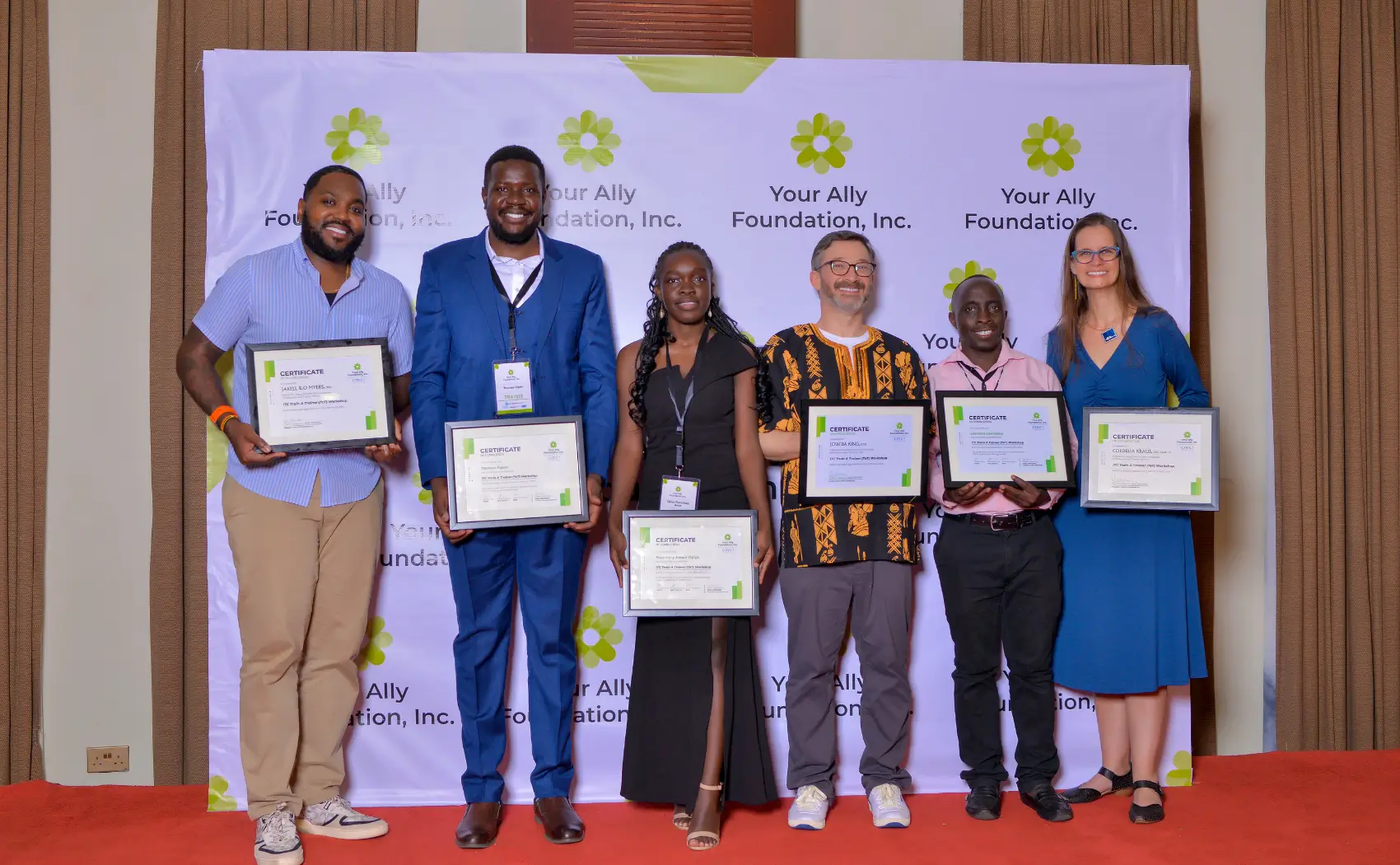
Since 2021, Your Ally Foundation has partnered with CMC: Foundation for Change to empower caregivers and communities across Uganda, Zambia, Kenya, and the African Diaspora through caregiver programming. We have conducted 8 virtual cohorts, training participants in the evidence-based Invitation to Change approach.
In 2025, we collaborated with MOOD to deliver educator training as part of the school-based mental health and substance use interventions program.
Our work focuses on strengthening caregiving, reducing stigma, and supporting recovery from substance use and mental health challenges through evidence-based programs and community collaboration
Our Reach
We operate in four key regions
Uganda
We collaborate with different organizations, government bodies, schools, health institutions and more.
Zambia
We collaborate with different Zambian organizations, government bodies, schools, health institutions and more.
Kenya
In 2025, we collaborated with MOOD to deliver educator training as part of the school-based mental health and substance use interventions program.
African Diaspora
We collaborate with different associations and organizations.
A tailored approach ensures that each community’s unique needs are addressed with culturally relevant and evidence-based interventions.
Collaborations Strengthening Our Impact
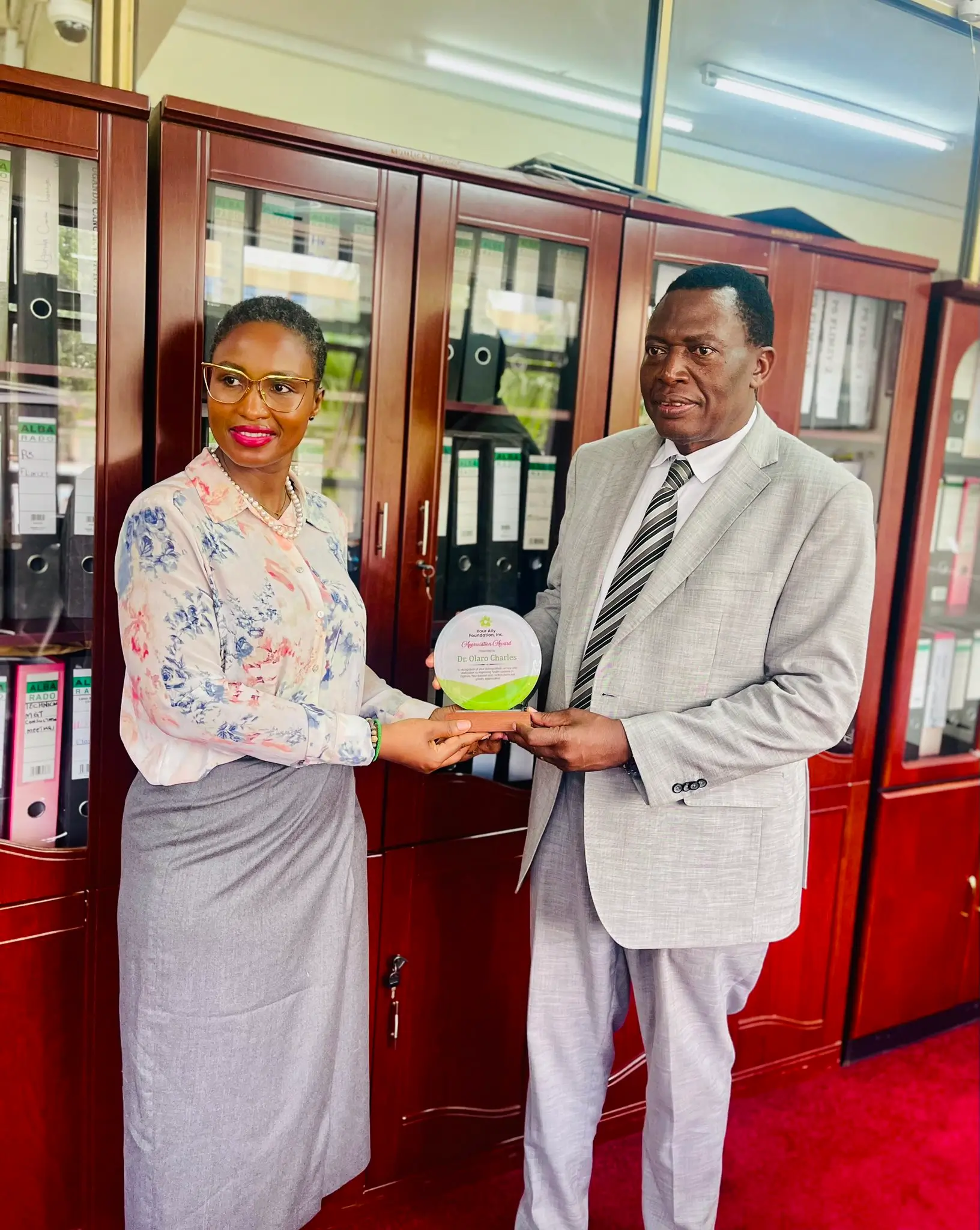
We partner and collaborate with trusted organizations to implement our programs effectively:
Uganda
Break Free Rehabilitation Centre, Focus on Recovery Uganda (FORE), Uganda Alcohol Policy Alliance (UAPA)
Zambia
Great North Rehabilitation Centre, Kafue Rehabilitation Centre (Pure Nard Teen Challenge), Kanjela Reformative Centre, Holy Family Rehabilitation Centre
African Diaspora
Uganda Boston Community Association, Restoration Church
These partnerships and collaborations enable us to deliver quality training and community support programs, expanding our reach and effectiveness.
Testimonials and Stories
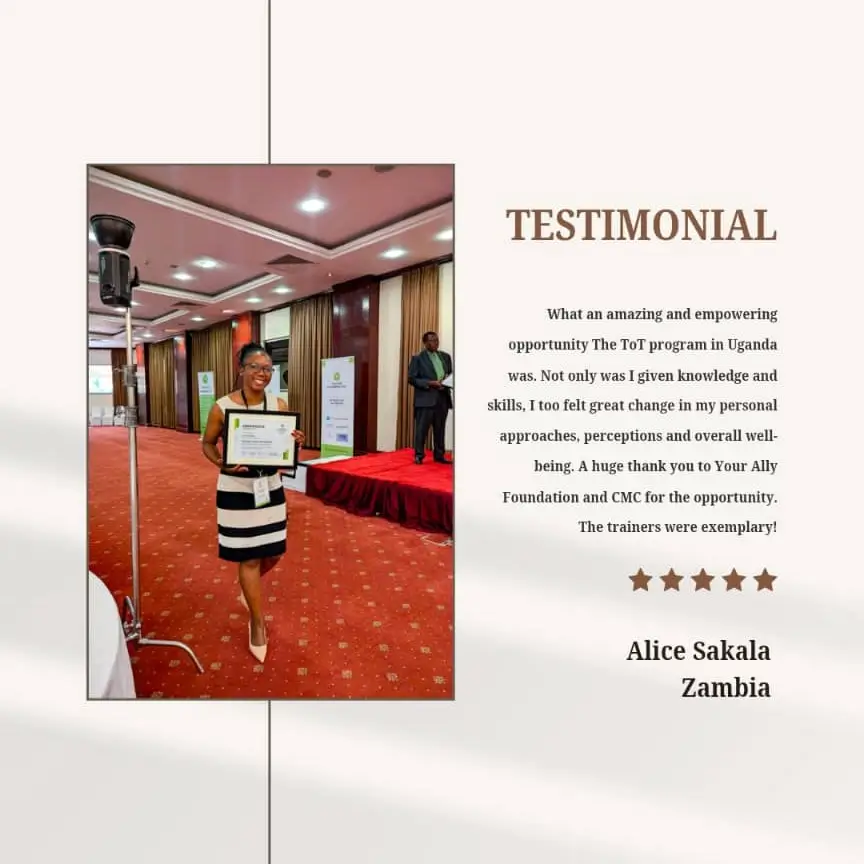
Participants report meaningful improvements in caregiving approaches and community support. We continue to collect inspiring stories from trainees and collaborators that demonstrate the positive change enabled through our collective efforts.

TESTIMONIES FROM UGANDAN PARTICIPANTS
Teacher’s Training

Namubiru Immaculate
Amber
Founder,Youth Plus Elite Club
Mental health in Uganda remains a critical yet often overlooked component of overall wellbeing. Despite growing awareness, many Ugandans continue to face stigma, limited access to care, and a lack of information about mental health conditions. In rural areas, myths and misconceptions still dominate, and traditional beliefs often take precedence over seeking professional help. However, a new wave of empowerment is emerging one rooted in awareness, education, and the right to make informed choices.
The theme “Empowered to Choose” highlights the power individuals hold in shaping their mental health journey. Through community outreach, school programs, and youth-led initiatives, more Ugandans are learning that mental health is just as important as physical health. Young people especially are becoming agents of change, advocating for safe spaces where conversations about depression, anxiety, trauma, and self-care are normalized.
Government and civil society organizations are beginning to invest in mental health services, integrating them into primary healthcare and training more professionals. Still, more must be done to ensure that every individual regardless of age, gender, or location can access the support they need.
To be empowered to choose is to break free from silence, seek help without shame, and support others with compassion. It is a call to action for Uganda to build a future where mental health is understood, respected, and prioritized.

Kanyange Pamela
Mary
Counselor
Substance abuse poses a significant threat to our youth; it’s time to confront it! We need the involvement of religious leaders, government officials, stakeholders, and NGOs. Fellow parents, educators, counselors, and school administrators, it’s time to take action. We need to enhance our parenting approaches. For us professionals, we must acquire additional skills to support and guide our children, as substance abuse is reaching epidemic levels in our nation.
The World Health Organization indicates that 70.1% are impacted by substance abuse, a concerning statistic. As a counselor, I have been troubled upon meeting youth affected by this issue, and it often appears that there is a lack of concern from others.
I want to sincerely thank Suzan, the founder, for her deep commitment to connecting with at-risk youth impacted by this crisis. It’s truly heartbreaking to witness the youth suffer.
I would also like to acknowledge our facilitators, Shelana, Alexi, and Johnathan, who motivated us by sharing valuable insights regarding mental health. This included innovative approaches to address the issue. Their teachings empowered us and prompted us to tackle the challenges we face. The models shared were extremely beneficial, such as a video presented by Jonathan, showing a counselor who pursued further studies abroad and battled depression. It provided me with perspective on managing difficult scenarios as a counselor and with my clients. The fight-or-flight response discussed by Shelana, along with mood-coping classroom techniques by Alexi, were also enlightening.
My focus was on developing a mental health and wellbeing lesson for the classroom. As I delved into it, I realized that, thanks to God’s grace, some learners excelled while others became disheartened and quit. The group presentations on the final day were especially engaging, as they enlightened the teachers on how to handle their students effectively. This was evident in their participation in role plays and skits, as well as their presentations. I am confident that their knowledge has been enhanced.
Our facilitators introduced us to Google Learning, which has now begun and continues to enrich our understanding. From the very start, this experience has been incredibly rewarding. I am optimistic that through networking and a continued push for mental health awareness in schools, similar to efforts made for HIV/AIDS, the younger generation will greatly benefit from our services, and we can combat substance abuse effectively. We must adopt a zero-tolerance policy towards substance abuse.

Kiragga
Fredrick
Restoration Counseling Services (RCS)
SPECIFIC MENTAL HEALTH NEEDS OF STUDENTS
Prioritizing mental wellness in schools, schools can support learners’ academic success and overall wellbeing. Today in our school spaces, what can we consider to be the mental health needs of our learners and their impact on classroom performance and social relationships: emotional support, under this student can be helped to manage stress related to academics, social pressures and personal issues,
emotional regulations: students can be guided to develop skills to manage their emotions, such as anxiety, anger or sadness.
Social support: our students need positive relationships with peers, teacher, and family members to feel supported and connected, social skills development also plays a vital role, whereby students can develop social skills such as communication, empathy and conflict resolution. Academic support: our students need help managing academic pressure and developing strategies to achieve academic success.
Mental health awareness: students need education about mental health, mental illnesses and the importance of seeking help, this will help them reduce stigma, students need to feel comfortable discussing mental health issues without fear of stigma or judgement.
Selfcare: our students need to develop selfcare practices, such as exercise, mindfulness, relaxation techniques among others,
Heathy habits: parents should provide balanced meals in their homes for the students, regular sleep, substance abuse prevention, praying to God regularly.
Referral services: students need to access services such as mental health professionals or support groups. Mental wellness significantly impacts our students’ academic performance, and how can this be noticed, good mental health enables students to concentrate and stay focused on their studies, students with good mental wellness tend to manage their time more effectively, prioritizing tasks and meeting deadlines, there is increased motivation, thus leading to increased engagement and participation in academic activities.
Enhanced creativity, good mental wellness fosters creativity, critical thinking and problem-solving skills.
In conclusion, when such needs are put to the forefront, we shall have set limits to the numbers of our students engaging in substance use and addition, as well as joining the rehabilitation centers for mental health support, there is need for the establishment of comprehensive counseling and therapy for individual students in school.